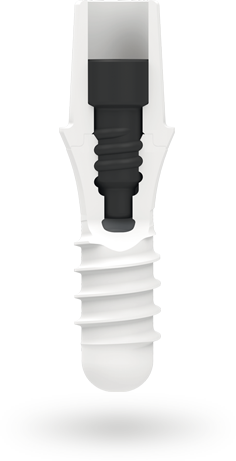
Zirconia Dental Implants have been on the market for several years, but Natural Dentist Associates has never been more excited about placing them until about 4 months ago when the Swiss made Zeramex Zirconia Dental Implant achieved FDA approval.
Advantages of the Zeramex Zirconia Implant:
Tooth colored and very esthetically pleasing
Etched/roughened surface to facilitate strong bone growth and integration with the implant
Abutment connects to implant with a metal free screw, no cement is necessary
Design of implant system enables easy replacement of a single tooth or a full mouth of teeth
Crowns and abutments can be made/altered in the lab without the need to prepare, adjust, or drill in the patient’s mouth
Very biocompatible with excellent gum adaption and periodontal health “Design of (Zeramex Dental) implant system enables easy replacement of a single tooth or a full mouth of teeth with zirconia dental implants”. This statement is a very big deal. Many people need all their teeth replaced. The only implant option in the past when replacing a full mouth of teeth has been to use Titanium Dental Implants.
Now we can literally replace a full mouth of teeth easily with metal free Zeramex Zirconia Dental Implants, Zirconia Abutments, and Zirconia Crowns.
Titanium technology has been around a long time and is quite evolved. Titanium implant dentistry is a very tried and tested way to replace teeth, and the dental profession has had a lot of success replacing teeth with them. In recent years there has been increased demand for metal free and tooth-colored dental implant options. Solutions such as All on 4 and teeth replacement cases involving 3 or more implants and crown/bridge work are now practical and easy with the Zeramex Implant system.
Zeramex has advanced Zirconia Implant technology out of the implant “dark ages” and into todays world of implant dentistry.
The Zeramex implant has brought Zirconia Dental Implants a long way, but differences still exist between zirconia and titanium implants and zirconia and titanium dental implant procedures.
Zirconia Dental Implants are metal free and in combination with a zirconia abutment and zirconia crown, we can replace missing teeth with a full nonmetallic option.
As a matter of providing treatment plan options to our patients, we present our patients the options of either Zirconia or Titanium Dental Implants. Patients with other metals in their mouth or who need metal free options may be better served with a Zirconia Dental Implant.
Due to the healing period of dental implants (9-11 weeks for titanium and 3-4 months for zirconia) PRF treatments are recommended. PRF treatments are also very beneficial in Wisdom Tooth Extraction sites. PRF is highly recommended in areas where root canals and necrotic teeth have been removed. Some Oral Surgeons believe PRF may soon emerge as the standard of care for all tooth extractions sites.
Root Canal or Replace the Tooth with a Dental Implant?
Dental implants are much better financial investments than doing root canals. Dental implants can last a lifetime, whereas root canals last 5-10years on the average. Dental implants cost more than root canals, but some argue “why do a root canal at a cost of $3000…it may be better to remove the tooth and just do an implant that can last a lifetime?” Implants on the average cost in the range of $6000 and $6000 + $3000 = $9000.
Root Canal Vs Dental Implant
Is it better to do a Root Canal or a Dental Implant?
Is the tooth really fixable at all? If a tooth is cracked down the root it is not repairable. A root canal will not work at all for a cracked tooth. Many times cracks cannot be diagnosed until money and time has been wasted on a root canal and crown.
Is the tooth worth fixing anyway? If there is hardly any tooth remaining because the top crown portion is all rotted-out, the tooth may fall apart in a short period of time anyway.
Root Canal will take 3-5 dental appointments and cost $2000 – $4000. The necessary procedures include the root filling, crown build-up (a fill for the top part of the tooth) and a crown. The procedures altogether take 3 – 4 hours in the dental chair. On the other hand, a dental implant takes 3 dental appointments and costs $3000 – $6000. An implant takes 1 – 2 hours in the dental chair. The life expectancy of a root canal is 0 – 10 years, but an implant is expected to last a lifetime. There are no health concerns with implants whereas root canals have been rumored to have health risks and cause jaw bone infections. Root canals can also damage the jaw bone and make getting implants in the future very costly if not impossible.
About doing a root canal or implant
Cost of root canal and implant. The cost now and into the future should be considered especially since most root canals will fail within 1-10 years and may need to be replaced with implants
Time spent in the dental chair – your time is worth something and dental procedures are not fun
Dental insurance coverages for root canals and implants
Health concerns
How long do Root Canals last on the Average?
Many people will be placed in a position where they need a root canal. Every year thousands of root canals fail for many different reasons, including root re-infection, root fracture, decay. At a certain point, a tooth may not be repairable or it may get to the point where a tooth is a poor financial investment. Root canal teeth may last only a year, possibly up to 10 years and maybe if you are super lucky, 15 or 20 years.
How Long do Dental Implants last on the average?
Most dental implants, after initial success, last a lifetime. Investing in a root canal can lead to major bone health and infection in the future, requiring multiple bone graft surgeries, cost thousands of dollars and it may not even work. After root canal failure, many people wish they had skipped the root canal and done an implant instead.
Are Root Canals Worth the Money?
Let’s consider these two situations: 1) Root Canal. A tooth in need of a root canal also needs a filling and a crown to stand a chance for success. In the Burtonsville, Maryland area, the cost of a root canal, filling and a crown is $3200 – $4000. The patient will typically need to see a root canal specialist for the root canal. This means the patient will need to go to a different office, meet a different dentist, fill out a bunch of new forms, possibly get more X-rays taken, have another exam and finally receive a diagnosis and root canal treatment.
How Long does it take to get a Root Canal?
The root canal may be done during the same visit or the patient may need to go back for a second visit to get the root canal. The average root canal takes 1 – 1.5hrs to complete in the dental chair. The procedure is not especially difficult to sit through, but it is tedious and often the patient will need to open wide for long periods of time.
Do All Root Canals need a Crown?
Once the root canal is complete, the patient will be sent back to their normal dentist to get a filling and crown procedure. A filling and a crown takes 1-1.5 hours of time. The patient gets a temporary crown and needs to return back to the dentist doing the crown to have the permanent crown placed 2-3 weeks after crown preparation.
Is a Root Canal Worth the Investment All Things Considered?
To summarize, the root canal costs $3200 – $4000, 5 visits to two different dentists and probably 4 hours in the dental chair. The chance for initial root canal success is 85-90% based on the dental literature. Success after 10 years goes way down well under 50%. Root canal teeth can become re-infected and cause jaw bone infections. Root canal teeth are dead and become more brittle over time and are more likely to crack and break.
How do Implants Replace Teeth?
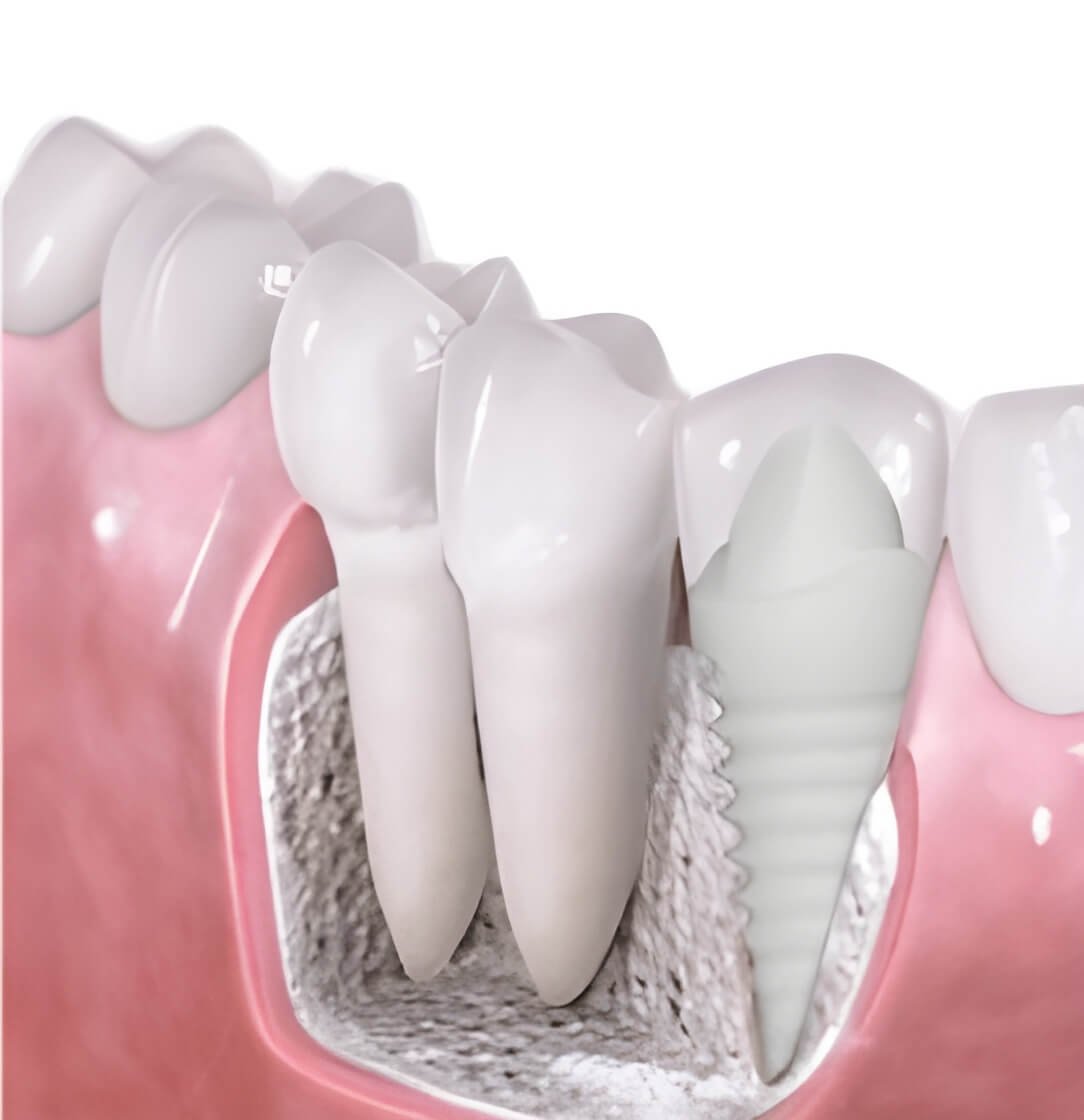
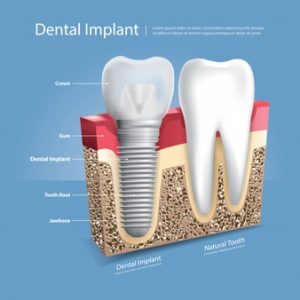
A single tooth replacement with a dental implant. A tooth replaced with dental implant includes the implant post, abutment and crown. The group of these parts comprises a tooth replaced with a dental implant. The cost of dental implant treatment in Burtonsville Maryland on the average is $3500 – $5500. Patients typically report teeth replaced by dental implants look like teeth, chew like teeth and are indistinguishable from natural teeth for the most part.
The Dental Implant Procedure and Process
The patient will typically need to see an oral surgeon specialist for the dental implant placement and tooth extraction. This means the patient will need to go to a different office, meet a different dentist, fill out a bunch of new forms, possibly get more X-rays taken, have another exam and finally receive a diagnosis and a dental implant. The implant may be done during the same visit or the patient may need to go back for a second visit to get the dental implant. The implant placement takes 30 minutes to complete in the dental chair. The procedure is not especially difficult to sit through, and it is normally surprisingly painless. The patient will be referred back to their regular dentist in 2-4 months for an impression for the abutment and crown which is made at a dental lab. After the impression appointment, the patient will need to return in 2-4 weeks to have the crown and abutment inserted.
How it works with getting an implant?
To summarize, dental implant therapy costs $3500 – $5500, 3-5 visits to two different dentists and probably 1.5 hours in the dental chair. Dental implants have a 95% initial success rate. After 5 years the success rates of dental implants goes up to nearly 100%. Dental Implants do not decay like natural teeth and implants are also less susceptible to gum disease than natural teeth. Most implants placed today have a great chance of lasting a lifetime.
Are implants an alternative to root canals?
It should be noted that dental implants are not an alternative treatment to root canals. If a root canal fails, the patient can always have the tooth removed and replaced with an implant. Many factors should be considered such as the chance for success of the root canal, the amount of insurance coverage for the different procedures. For example if, a dental insurance plan pays for more of one treatment verses the other, the patient can take the costs of the procedures into consideration. Ultimately, it is the dentist job to provide all the facts and the patient is to make an educated, informed decision about treatment. How to properly remove a root canal tooth?
We will provide a fair opinion about root canals and implants
At Maryland Holistic Dentist, we will provide a 100% unbiased opinion and refer you to a specialist if you decide a root canal is the best option for you. If you decide to have an implant, we have a full service dental implant center and we will remove and replace the tooth with a dental implant in as few as 3 visits in 3 months. We offer zirconia metal free implants and titanium dental implant.
Common Root Canal Questions:
Are root canals safe?
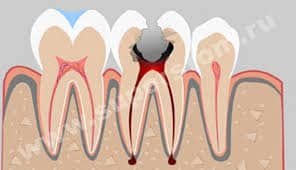
Root canal safety varies from one person to the next and is relative. What is a root canal? A root canal is where a tooth has died or is dying and where a treatment is performed to save a tooth. In every tooth root there is a living nerve, artery and vein. This living tissue resides in a tiny space at the center of the root. We call this tiny space in the center of the root a “canal”. When a tooth has a crack or decay that gets into the canal, the tooth will surely die. The tissue will be destroyed by any small bacterial contamination. A root canal is where a dentist attempts to clean the canal of the tooth and place a rubber based filling material and sealant.
How to avoid needing a root canal?
If a tooth is dying, treatment is absolutely medically necessary. There are only two options: 1) tooth removal 2) root canal. There are no other treatment options for a dead or dying tooth. The only way to prevent a root canal is to prevent the tooth from dying in the first place. Focus should be placed on early treatment of tooth symptoms and regular dental exams to treat dental cavities early. Also, treat tooth clenching and TMJ problems which is the leading cause of cracked teeth and extractions / root canals. Teeth that become symptomatic should be treated immediately with dental ozone, bite adjustments and whatever is necessary to remove the cause of tooth inflammation. Every attempt to preserve the vitality of the tooth should be made and the cause of inflammation should be removed it at all possible.
What is a root canal?
A root canal is really a filling material placed in the canal of the root of a tooth. The filling is intended to prevent bacterial from leaking out of the tooth and into the underlying bone. If bacteria leaks from the tooth it will cause an infection and eventually an abscess. Obviously the bacterial infection is a medical problem.
Are root canals bad for your health?
Additional problems with root canals are people are often allergic or reactive to the filling material and sealant placed way down into the root. The tooth root is porous and particles of the filling material can leak out into the underlying bone and gum. An individual can develop antibodies to the root canal materials and there can be an immunological reaction. If a patient is reactive to the root canal material, there can be white blood cell responses and chronic inflammation.
A root canal is a dead tooth. The human body is constantly looking for things that do not belong and the system knows the difference between self and non-self. Is the root canal tooth non self? The debate continues.
Will a root canal make you sick?
the jury is still out. If you are allergic to the root canal filling material or have an infection caused by a failing root canal, something should be done. The options would be tooth extraction or another root canal with possibly a different filling material.
Are there alternatives to a root canal?
No. The only other option is a tooth extraction or tooth removal.
Are there natural root canals?
No. There is nothing natural about having a hollow dead tooth filled from top to bottom with foreign material in your mouth.
Do holistic dentists do root canals?
Sometimes but most do not believe root canals are good.
Is there a natural alternative to a root canal?
No.
How to treat a root canal naturally?
There is no way to do a root canal naturally.
Are dental implants safer than root canals?
The are no reported human reactions to zirconia and very few to titanium. There are risks to implant surgery, but implants can be placed very safely. Implants rarely fail once they have healed properly. Implants do not have canals or pores with bacteria in them like root canal teeth can. The risk of root canal failure goes up every year after initial success. The success of implants is nearly 100% after successful placement and thy typically last a lifetime.
What happens if you don’t get a root canal?
you will get a jaw bone abscess and eventually get very sick. An extraction is necessary.
Can I get an Implant if my root canal does not work?
Root canal failures can cause lots of jaw bone infection and loss of bone. Sometimes the jaw bone heath can be so poor after a failed root canal that a dental implant may not be possible even after extensive bone grafting and gum grafting efforts. Most of the time a dental implant is possible after a failed root canal. Many people may opt for a root canal and then do a dental implant when the root canal fails. All pros and cons should be considered in treatment decisions.
Dental Implants Insurance and Cost of Teeth Implants?
It really depends on the specific insurance plan, whether or not Dental Implants are covered by Dental Insurance. Some Dental Insurance companies will pay for a percentage of Dental Implants and some will exclude coverage for Dental Implants. Dental Implant coverage depends on the quality of the Dental Insurance plan. Obviously the cost of dental implants is high, so insurance coverage for dental implants is a concern.
dental implant insurance cost
How much is a Dental Implant and How much will Insurance pay for Implants anyway?
A typical Dental PPO insurance will cover 50-80% of the cost of Dental Implants. Most Dental Insurance plans have an annual maximum benefit such as $1500-$5000 at which point the patient will need to pay for 100% of the fee. Some Dental Implant Insurance plans have a maximum allowable charge and others will pay on a pre-determined fee schedule. We have insurance professionals in the office who will contact your insurance company and determine how your Dental Insurance works in our office.
Dental Implants consist of the new root (the Dental Implant itself) and a Dental Implant Crown. Often times Dental Insurance companies will pay for the Dental Implant Crown, but not the Dental Implant. Sometimes both the Dental Implant and the Dental Implant Crown will be covered by insurance at different percentages.
Can there be additional Costs of Dental Implants?
There are also additional adjunctive dental implant procedures that may need to be performed such as gum grafting, bone grafting, PRF and Ozone therapy. Insurance may or may not cover these procedures. If there is a bad tooth to be extracted, most insurances will pay for 80% of the Dental Extraction.
Do some Dental Implants Cost more than Others?
Not all Dental Implants are created equal- they come in different qualities. It is very important not to get a generic dental implant or an implant that is made by a finically unstable company. There used to only be 5 or 6 dental implant companies, and now there are literally thousands. The question is, which ones will be in business next year? You do not want to have a dental implant made by a company that goes out of business because parts will not be able to be purchased in the future, and instead of having the option to repair your implant should there be an issue with it, you may be forced to remove and replace the implant.
How much is a Dental Implant?
The fair market cost for a non-generic Dental Implant or one made by most financially stable companies in the Washington, DC area is $1,500-$3,000. The fair market cost of a Dental Implant Crown and dental implant abutment is $1,500-$2,500. A gross average to replace a single tooth with a dental implant is in the neighborhood of $4,000. If gum grafting or bone grafting is necessary, the patient could pay an additional $500-$2,000, depending on what needs to be done.
Call us today at 301-421-1996 in Burtonsville Silver Spring Maryland with any Dental Insurance questions.
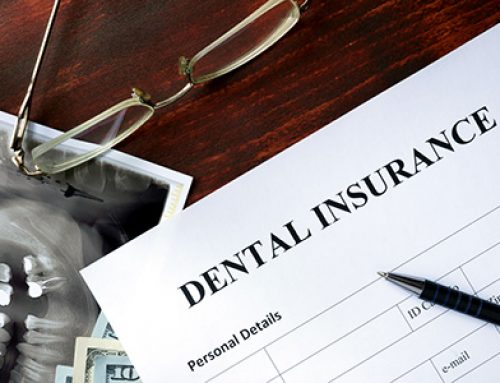
Will Dental Insurance Cover Mercury Filling Removal?
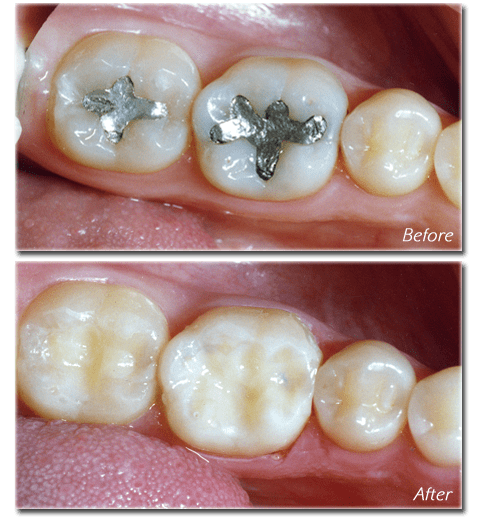
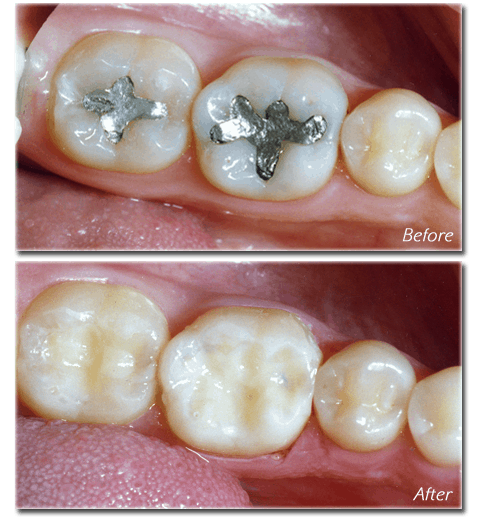
It depends on the exact insurance plan. SMART amalgam mercury filling removal may or may not be covered. The usual situation is the insurance company will pay for regular filling replacement, but not for the extra fees for removing mercury safely. Maryland Holistic Dentist charges an extra fee for the safe amalgam removal as apart of a dental filling replacement fee. The extra “safe removal fee” is certainly not covered by any insurance company. Many dental offices charge a separate fee for safe removal because it is a lot of additional work. And it does take a lot of extra time and materials.
silver fillings safe
Coverage Depends on Specific Insurance Plan
Cost of amalgam filling removal depends on how much your insurance will pay for the procedure. A typical Dental PPO insurance may cover 80% of the cost of the filling removal. Most Insurance plans have an annual maximum benefit such as $1500-$5000 at which point the patient will need to pay for 100% of the fee. Some Insurance plans have a maximum allowable charge and others will pay on a pre-determined fee schedule. At Maryland Holistic Dentist, we have insurance professionals in the office who will contact your insurance company and determine how your insurance works in our dental office and give you a close estimate of costs for your treatment.
What is Amalgam?
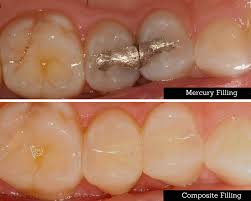
Amalgam fillings are made of about 50% mercury and a 50% mix of tin, silver, and copper. Most of us had them placed when we were kids but now with more material options and the fillings breaking down the question is often, “When should I replace my amalgams”. All too often we wait too long and a root canal or extractions are our only options.
Top Five Reasons Why You Should Remove Amalgam Fillings
Your Amalgam Fillings Are Over 10 Years Old
At the ten year the margins on the fillings start to break down leaving a small gap between the filling and the tooth. This area allows leakage and over time decay starts to form. Since amalgams do not bond to the tooth structure but are held in place with retention.
You Have Any Metal Sensitivity Issues.
It is very common to have sensitivity to one or more of the metals that are in amalgam fillings. There are inexpensive lab tests to verify this and determine the ideal material to use with your fillings. There is no safe amount of mercury exposure across the board. Some people cannot tolerate a small amount while other it does not seem to have such an effect. At what point it becomes a problem varies. The one thing we know is that you do not want any exposure if possible. There is also the issue of the battery effect that the metals in your mouth cause.
You Grind Or Clench Your Teeth.
The debate with amalgam fillings starts with the issue of their mercury content. We know that it is released as a vapor when heated. This happens when we drill on amalgam fillings and that is why it is important to take special precautions when having them removed. They are also heated up when we grind on them. Teeth grinding (bruxism) is a common issue and should be considered when replacing your fillings.
Your Fillings Have Become Sensitive.
Amalgams weaken your tooth structure by contracting and expanding with changing temperatures. Heat causes expansion which we see in thermometer. Over the years you develop small cracks around your old fillings till eventually pieces start to come off. At this point crowns, root canals, and extractions are needed. It is better to treat these areas early to avoid larger restorations.
Your Teeth Have Started To Fracture Around Your Fillings.
This can happen and you do not feel a thing. If your fillings are large then it may require a crown to restore the tooth and avoid a root canal or extractions. If the filling covers more than 50% of the chewing surface a crown may be your best option. Especially when the fillings are large if you do not replace then when needed you will eventually need more extensive dental treatment.
Safe Removal of Mercury in Amalgam Fillings is Best
Your best bet is to get an exam from your dentist and make a plan to restore your teeth. Waiting for treatment leads to more costly work, more extensive treatment needs and a higher likelihood you will lose teeth. The materials we have to use for dental work today have great advantages. The material we use are selected with consideration for:
Biocompatibility
Safety during placement
Health impact to the patient
Safety during removal
Performance in chewing function
Appearance
Longevity
What if any damage to tooth when the material fails (i.e. does it cause cracks in teeth or destroy the nerve of the tooth)
Contact us today at 301-421-1996 in Burtonsville with any Insurance questions.
Is Mercury Released from Amalgam Fillings During Clenching:
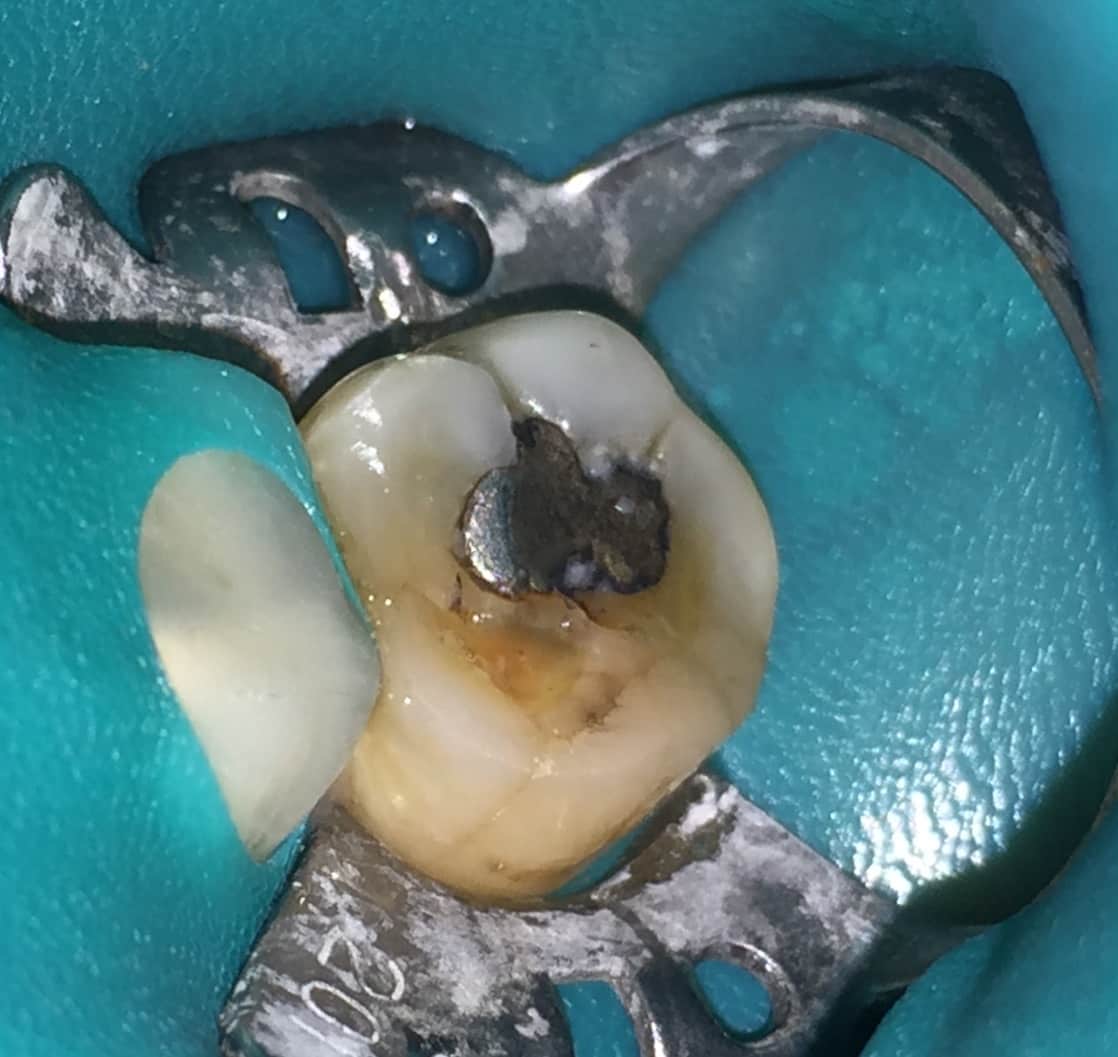
Amalgam filling removal in people who grind their teeth can be challenging cases. Clenching accelerates mercury release from amalgam fillings as a result of friction and heat. Friction from teeth contact causes release of mercury gas that can be absorbed into the body. Mercury containing fillings break-down faster and pieces can break away and be ingested. Wear of teeth enamel including cracking, chipping and abrading will decay and will prematurely break down existing fillings. In the picture below, the yellow area adjacent to the amalgam filling is where all of the white enamel has been worn away, exposing the underlying Dentin. The amalgam filling is also crumbling and separating from the tooth.
amalgam removal cost
Problems with Amalgam Fillings During Chewing
TMJ or TMD is defined as a misalignment between the best fit of the teeth and the path of closure of the jaw. Airway problems also cause teeth clenching during sleep. It is also typically complicated by an upper airway problem and general complaints from the patient about head, neck and upper back tension. The “TMJ” causes tooth clenching and grinding or bruxism among many other symptoms. Temporomandibular joint problems can be diagnosed and cured by a specially trained dentist using dental appliances for sleep apnea and TMJ.
Amalgam fillings Release More Mercury During Chewing
In the case below, the amalgam filling was removed using the IAOMT.org safe amalgam filling material protocol. Additionally the TMJ problem was improved with a bite adjustment and the exposed dentin was sealed (as was the original amalgam filling material) with a BPA-free tooth colored composite filling material. Tooth colored composites can out perform silver fillings in many ways, but not having mercury sure makes them a less concerning chioce.
The use of a Sedative drug to keep a patient calm throughout a dental procedure. Many patients do not need a sedatives to remain calm during dental appointments. Others will need “Sedation” for all dental procedures including dental cleanings. We provide:
Do you remember having a traumatic experience in the dentist’s chair that made you afraid of the dentist forever? Statistics show that roughly 15% of Americans suffer from dental anxiety. It is more serious than just a pair of sweaty palms – it’s a paralyzing fear of dentists or dental treatment.
Eventually there comes a point where you will need to cope with your dental phobia. Modern dentistry offers what is called Sedation Dentistry. By definition, sedation dentistry is the use of pharmacological agents to calm and relax the patient prior to and during a dental appointment. It serves to ease the patients with dental anxiety so that they can continue their routine dental care.
People Who Can Benefit from Full IV Sedation Dentistry:
Severe Dental Anxiety
Claustrophobia
Gag Reflex
Difficulty Getting Numb
Special Needs
The need for several dental procedures
Is Sedation Dentistry safe?
Nowadays, the sedation procedure is operated with state-of-the-art tools and options that make treatments not just tolerable, but also comfortable and Safe. Patients of all ages feel no discomfort whatsoever during and after treatment. It is dental relaxation at its finest.
Are doctors certified for Sleep Dentistry?
Absolutely. Doctors must receive their [certification] in order to conduct a sedative treatment. Yes we are certified through an IV Sedation Dentistry Residency and the Maryland State Board of Examiners.
How popular is Anxiety Free Dentistry?
Anxiety Free Dentistry protocols have been used safely for over 30 yearswith millions of dental procedures. Roughly only 5% of all patients will choose or really need sedation services at some point. Remember though, more than 80% of Americans do not suffer from dental phobia or anxiety, which is why patients may resort to Sleep Dentistry in the first place.
How does Sedation Dentistry work?
Before beginning any procedures, your medical history will be reviewed and a doctor will explain how sedation and sleep dentistry works.
Prior to your dental care appointment, you will be able to choose what treatment option you want to undergo. We offer IV Sedation, Oral Sedation and Nitrous Oxide Sedation
On the day of your appointment, you’ll take a medication that makes you relaxed and comfortable.
Once the procedure and sedation is about to begin, your vital signs will be monitored very closely.
Although you are not completely unconscious, many patients sleep through their dental appointment and a few patients even have no memory of their treatment. Many patients claim it is the best sleep they’ve ever had.
Due to the relaxing effects of both oral and IV medication, you will be required to have a friend or family member bring you to the dental office and take you home following your appointment.
We have done thousands of dental bridges and implants and root canals. We have no financial bias in how your tooth is replaced. Bridges, Implants, we offer both services. We want to offer the best tooth replacement options for you and that is it. This article is our opinion based on years of private practice experience. In this article we compare the advantages of getting a tooth bridge or implants in this article. In most cases it is much better to get a dental implant than a tooth bridge for reasons that will be evident after you read this article. Please give us feedback.
A Deeper Dive into the Pros and Cons of Implants and Bridges
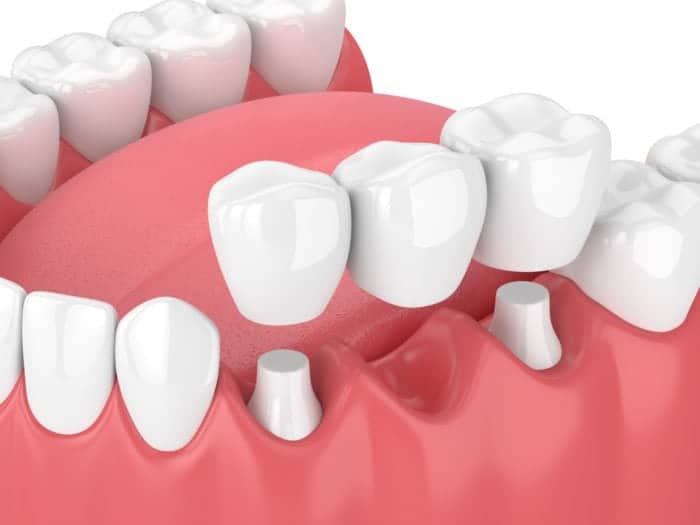
Implants do not harm existing teeth by drilling them down, connecting teeth, and gluing fake teeth to other existing teeth. Dental bridges use existing teeth to support fake replacement teeth. One advantage of bridges is they can be made very quickly and they do stay in the mouth permanently. A tooth bridge is when new teeth are glued to and supported by existing teeth.
For example, a three teeth bridge can be glued to two teeth. There are situations when a traditional bridge is the best method to replace a tooth. But in general, implants are a better option for replacing teeth compared to bridges. Implants last longer than bridges. And implants in many cases also cost less.
Cases When a Bridge is a Better Option than Dental Implants:
If teeth in the mouth already need crowns, getting a bridge is a much more cost effective option. For example if a tooth is missing and the adjacent teeth need crowns, a bridge or two crowns and an implant are the treatment options. In this case the bridge will cost $6000-$8000. An implant and two crowns will cost $8000-$10,000. The second treatment plan is a much better option and will last longer, but the bridge is much more economical.
Bridges usually fail due to decay. Teeth involved in a bridge are connected and cannot be flossed like individual teeth. More difficult hygiene for bridges makes them more susceptible to decay. One area of decay and the entire bridge needs to be replaced.
What is a Dental Implant?
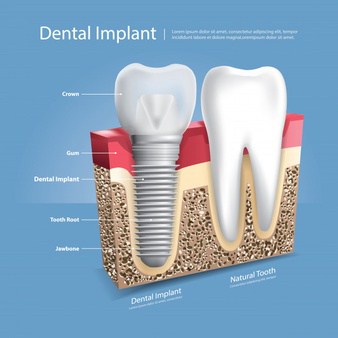
A dental implant replaces a tooth by literally adding a new tooth root and crown into your mouth. Implant replacements co-exist with natural teeth and look, feel and function the same as their natural teeth counterparts. Maintenance such as brushing and flossing around implants is the same as around natural teeth. Bridged teeth require special floss called super floss and Waterpiks.
implant 3
Advantages of Getting an Implant instead of a Natural Tooth Bridge
Implants do not put pressure and connect to natural teeth
Implants do not decay, get cavities or need root canals
Dental implants rarely crack or break like natural teeth
Implants cost less than bridges when replacing a single tooth
What is a Dental Bridge?
A bridge is where missing teeth spaces are filled by connecting fake teeth to natural teeth. A bridge procedure typically requires drilling at least 1mm off the outer layer of the natural teeth. Bridges provide stability and prevent teeth from shifting and collapsing into missing teeth spaces. Bridges feel different since teeth are connected and can no longer be flossed individually.
tooth bridge what is
Dental Bridge Cost vs Implant Cost?
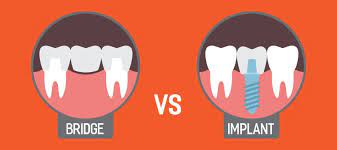
For replacing one tooth, a dental bridge costs about as much as three crowns. In the Washington DC metro area, the cost of a dental bridge is about $5000. The cost of replacing a single tooth with a dental implant is $4500 on the average.
How Long do Dental Implants and Natural Teeth Bridges Last?
Yes, on the average bridges last 5-13 years. Dental implants can last a lifetime. Bridges are more susceptible to failure than implants. Bridges are susceptible to cavities, gum disease, fracture, and root canals. Implants do not have nerves. They do not decay. And implants present little risk to gum disease or fracture.
Implant and Dental Bridge Procedures
Bridge procedures can be completed in 2-3 weeks and two trips to the dentist. Replacing a tooth with an implant usually takes 3-6 months and 3-5 trips to the dentist.
Teeth need to be drilled down by 1mm or more and connected with spans of false teeth
Bone is lost when teeth are removed and not replaced. Tooth function stimulates bone vitality and proliferation. Use it or lose it.
Bridges are more difficult to clean because teeth are connected. Regular flossing cannot be done.
Teeth involved in bridges decay more easily since they are connected and more difficult to clean.
Bridging teeth prevents them from moving
Teeth involved in a bridge can fracture due to more force placed on fewer teeth. Teeth are being leveraged to replace missing teeth.
Teeth in bridges are at increased risk for needing root canal therapy. Heavier biting forces can cause nerves in teeth to die.
Bridges usually do not last as long as dental implants
Bridging teeth leads to more tooth loss. Then what? A bigger bridge or more implants?
When is it Better to Do a Dental Bridge Instead of an Implant
When a dental implant is not possible.
In cases where the patient has a bone disease
In the event of uncontrolled systemic disease such as unstable diabetes
When your insurance company pays for bridges and not implants. And you cannot afford to pay for a dental implants. Beware when the bridge fails you will lose more teeth and replacement costs will get a lot more expensive.
Does Dental Insurance Pay for Implants and Bridges
Most dental insurance companies have benefits for tooth replacement. Most modern insurance companies have benefits for implants and bridges. Coverages always come down to individual policies and should be verified prior to any dental or medical procedure. Coverages have nothing to do with cosmetic vs non cosmetic procedures. Tooth replacement is necessary. Some dental plans are limited with waiting periods and monetary annual limits.
Why it is Necessary to Replace a Missing Tooth
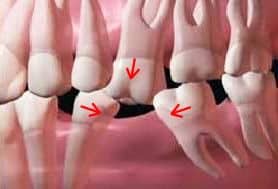
Teeth can shift and the bite can go bad. Bite collapse.
Tooth wear and breakage because of imbalanced and uneven biting forces around the area of the missing tooth or teeth. Bad bites can lead to tooth clenching and grinding. How to stop teeth clenching at night.
Bone loss and gum disease especially near where teeth have been lost.
Food trapping in areas where teeth are missing. Gum disease may develop as teeth shift and more spaces open up for food and bacteria to get stuck.
bad bite
Teeth Bridges cause more tooth loss
Research has shown that dental bridges will typically last 5-10 years. Bridges typically fail with the loss of another tooth and the need to bridge even more teeth or get an additional implant. For the loss of a tooth involved in a bridge:
Now there will be the need for more teeth to be replaced and a bigger less favorable bridge or 2-3 implants instead of one had an implant been done from the beginning.
Bone grafting will likely be necessary because a tooth has been lost for a long time
Crowns will be needed for any teeth surviving a bridge failure
Or maybe 3 implants if all teeth in the bridge are lost
Implants Last Longer Than Bridges
Dental Implants in the long run cost less than bridges because a bridge will eventually fall apart, resulting in the need for more dental implants. Bridges usually costs about as much as 3 crowns. One implant costs less than a 3 tooth bridge. Unless there is a reason why someone cannot receive a dental implant, there is no good reason to get a bridge. Implants now come in metal-free zirconia in the event of a metal allergy.
The dental implant is the best way to replace teeth. Bridges normally lead to bone and gum loss, poor cosmetic results, tooth decay / caries and more tooth loss. Research shows that 60% of all dental bridges fail during the first 10 years. Dr. Adams does implant teeth from start to finish. Teeth can normally be replaced from start to finish in 2-3 months in 2-3 short appointments.
Tooth decay as a result of irregular brushing & cleaning habits, excessive intake of sugar containing sticky foods, carbonated beverage consumption like Coca Cola, Pepsi, energy drinks etc and neglected oral hygiene,
Dry mouth can cause tooth damage. Drink plenty of water and rinse your mouth as much as you can to prevent tooth loss,
Gum diseases,
Old age,
Excessive cigarette smoking habit,
Never visiting a dentist for professional dental care,
Diseases like Diabetes Mellitus.
What Happens if Missing Teeth are not Replaced?
Problems with eating, drinking, speech & basic activities involving teeth,
Shifting and tilting of teeth in empty spaces created by lost teeth,
Over-eruption of opposing teeth causing elongated appearance and eventually loosening and mobility of teeth,
Problems in bite,
Loss of jawbone.
Who is a candidate for Dental Implants
Basically anyone who needs teeth replaced and who does not have unstable diabetes or any other unstable medical condition. Some people may not have enough bone for implants, but bone grafting procedures can be done to grow more bone. Most of the time implants are the best way to replace teeth. Occasionally teeth bridges may be cheaper, but the will not last as long and when they fall apart, more implants will be necessary.
Who is a candidate for a Bridge?
Anyone who has existing teeth and some missing teeth, can get a bridge. As stated above, usually getting an implant is better, but in certain situations getting a bridge may be considerable. Such as if insurance pays much more of the bridge than the implant. Or if the teeth in the mouth already need crowns and are not virgin teeth. An older person may opt for a bridge because the bridge may outlast them. Also, with age comes more medical problems.
Teeth Bridge Before and After
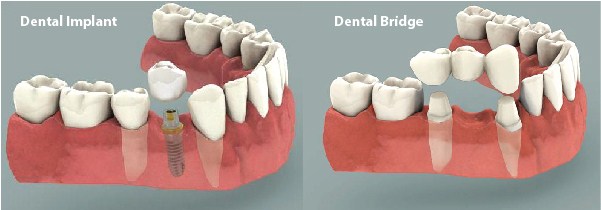
Dental bridges connect teeth. A dental bridge is two natural teeth drilled down and three connected crowns are glued to the teeth. An Implant is a process where a new root is implanted and a crown is connected to the new implant root.

 (301) 421 1996
 burtonsvillesmiles@gmail.com