SDS Zirconia Dental Implants
For decades, titanium has been the standard material for dental implants. It has an extensive clinical history and remains an excellent option for many patients.
But today, patients have another choice.
SDS zirconia dental implants provide a modern, metal-free alternative for patients seeking a more holistic approach to replacing missing teeth.
Zirconia is a high-strength ceramic material that has been used extensively in modern dentistry. Unlike traditional titanium implants, zirconia implants are metal-free and naturally white.
This makes zirconia particularly appealing to patients who prefer to minimize the use of metals in their dental treatment or who simply want a highly biocompatible ceramic alternative.
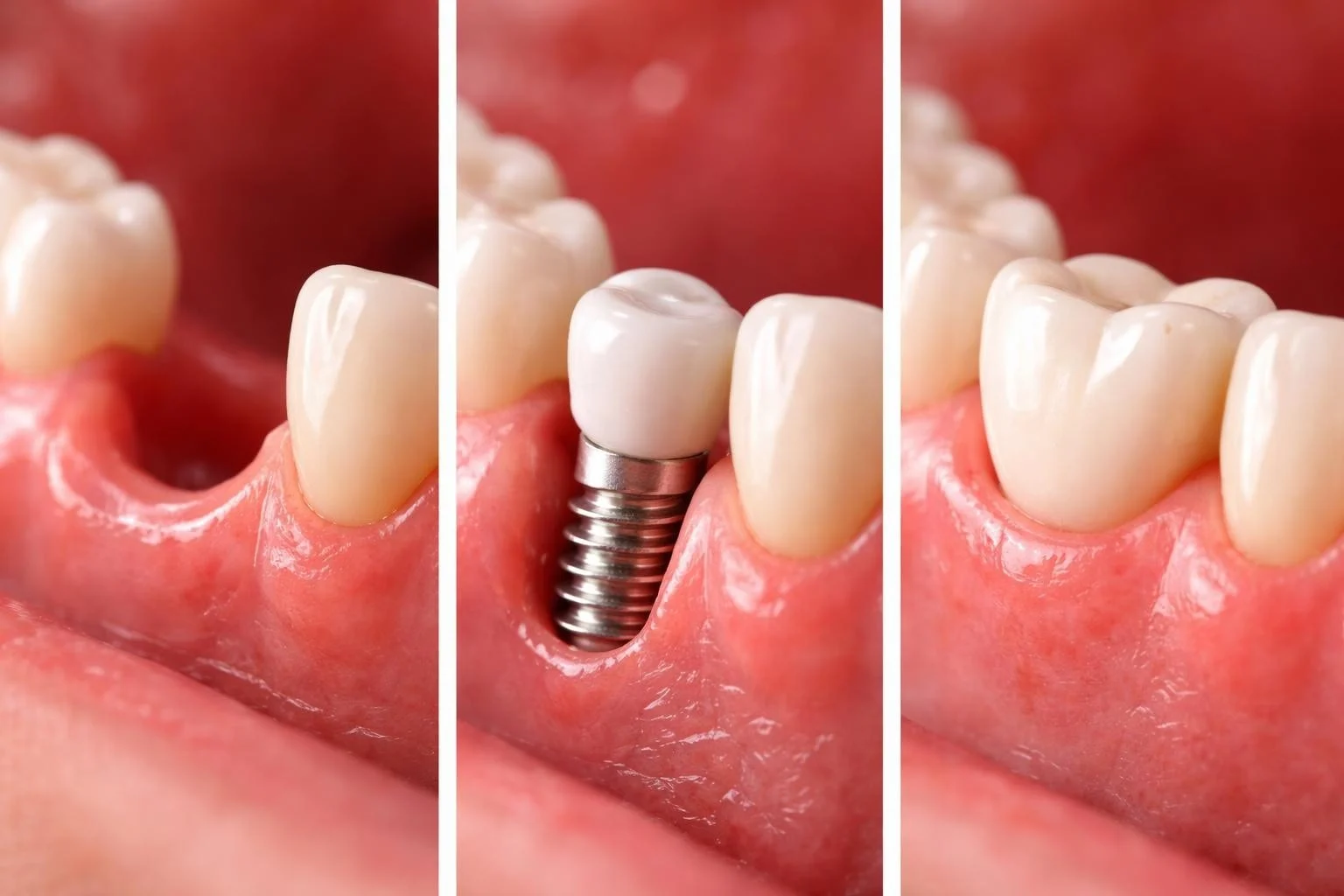
Early generations of ceramic implants had significant limitations. They offered fewer restorative options, and clinicians had legitimate concerns about strength, fracture resistance, implant design, and long-term predictability.
Modern zirconia implant systems are very different.
Advances in zirconia materials, implant design, surface technology, manufacturing, and restorative components have transformed ceramic implant dentistry. Today’s zirconia implants can achieve predictable integration with bone and provide clinicians with sophisticated restorative options that were not available with earlier generations of ceramic implants.
Modern clinical research increasingly supports zirconia as a viable alternative to titanium in appropriately selected patients, although titanium continues to have the longer clinical evidence base.
We use SDS — Swiss Dental Solutions zirconia implants as our ceramic implant system.
SDS has developed implant designs specifically around the properties of zirconia rather than simply attempting to reproduce a conventional titanium implant in ceramic.
The system allows us to combine modern implant dentistry with a metal-free treatment philosophy while maintaining the fundamental goals of implant treatment:
Stability • Function • Esthetics • Healthy Tissue • Long-Term Reliability
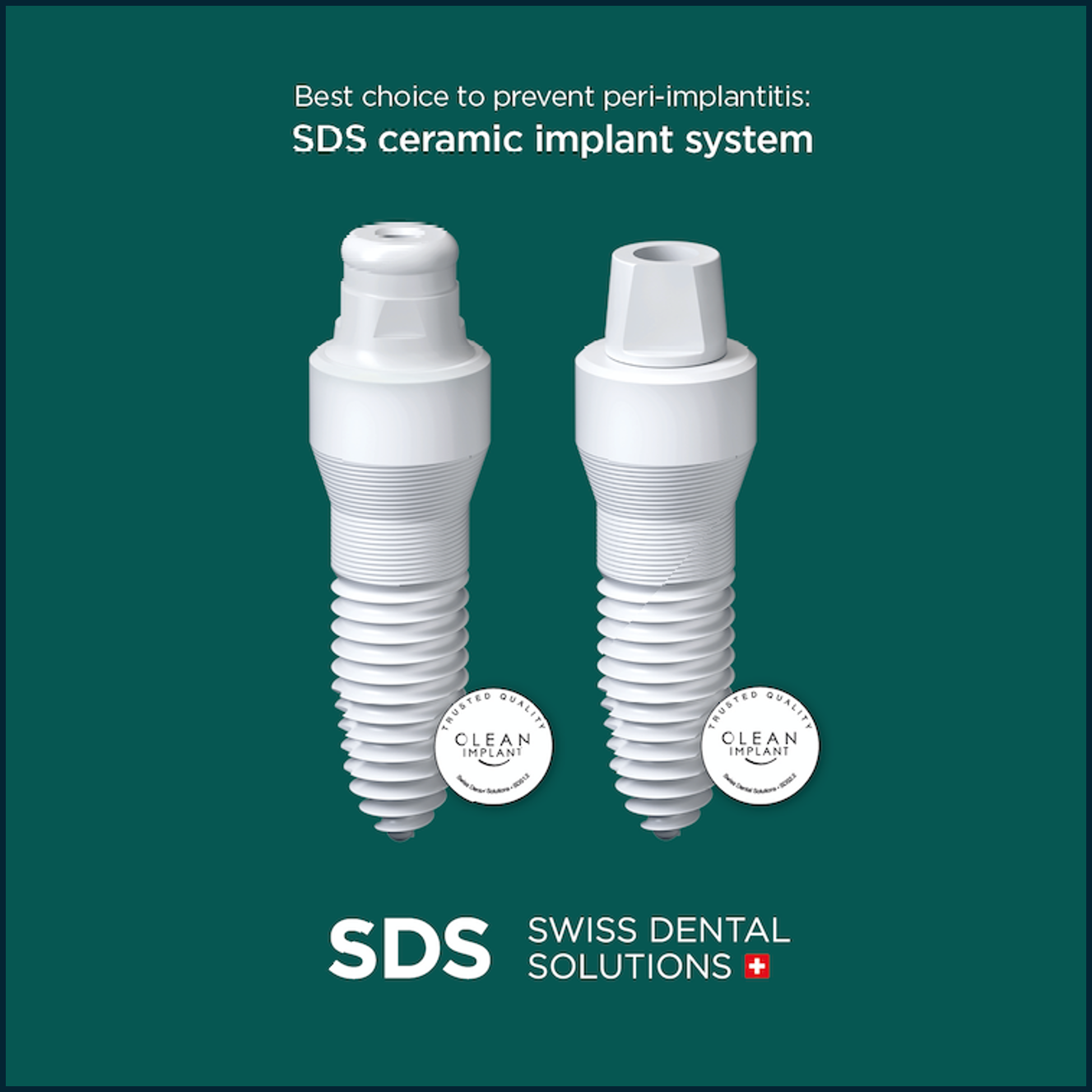
Furthermore, their resistance to bacterial colonization promotes better oral health outcomes, making zirconia implants a compelling choice for those seeking both functional and health benefits.
100% Metal-Free: For patients who prefer a metal-free approach to dentistry, zirconia provides an alternative to titanium.
Excellent Biocompatibility: Zirconia has demonstrated excellent tissue compatibility and the ability to successfully integrate with bone.
Natural White Color: Unlike gray titanium, zirconia is naturally white. This can be especially attractive in highly esthetic areas or in patients with thin gum tissue.
Healthy Soft-Tissue Esthetics: The white ceramic foundation can help support a natural appearance around the gums and implant restoration.
Strong, Modern Ceramic: Today’s dental zirconia is an advanced high-performance ceramic engineered to withstand the forces encountered in the mouth.
Choosing a holistic approach does not mean abandoning modern technology or evidence-based dentistry. It means considering the materials we place in the body as part of the overall treatment decision.
For patients interested in minimizing metals while still receiving modern implant therapy, zirconia provides an important additional choice.
There isn’t one implant material that is automatically right for every patient. Titanium has decades of excellent clinical documentation and remains the traditional standard in implant dentistry.
Modern zirconia implants now provide a compelling metal-free alternative with a growing body of clinical evidence supporting their use. The appropriate implant depends on the patient’s anatomy, bite, bone, restorative needs, health, esthetic goals, and personal preferences.
Ceramic implants have come a long way. What began as an alternative implant material has evolved into sophisticated implant systems designed specifically around modern zirconia.
For the right patient, an SDS zirconia implant can provide:
SDS Zirconia Dental Implants
Modern implant dentistry with a metal-free approach.
The surgical placement of zirconia implants involves the following steps:
This procedure showcases the precision of modern dentistry.
After the precision of implant surgery comes the critical period of post-operative care. This encompasses everything from managing discomfort to protecting the implant site from undue stress. Patients are advised to adhere to a soft diet, avoid using straws, and engage in gentle oral hygiene practices.
Ensuring the health and longevity of the zirconia implants also means regular follow-up appointments to monitor stability and tissue health.
23d6c923 6389 4231 a012 6fce25bb8e33
Maintaining the integrity of zirconia implants post-surgery is pivotal, and it starts with daily oral hygiene practices. The use of soft-bristled toothbrushes and non-abrasive toothpaste is recommended to prevent any damage to the delicate implant surface.
Once fully healed, patients can resume their regular oral hygiene routine, which includes brushing twice daily with an electric toothbrush to maintain optimal oral health.
The journey with your zirconia implants doesn’t end at surgery; it continues with regular dental check-ups. These visits are crucial not just for the long-term success of the implants but also for maintaining the health of the surrounding gum and bone tissues. Consistent check-ups and professional cleanings are integral parts of the care regimen, ensuring that the implants continue to function as intended.
One of the most compelling attributes of zirconia dental implants is their exceptional longevity and durability. Thanks to their osseointegration capabilities and sturdy ceramic material, zirconia implants are designed to withstand the test of time, potentially lasting a lifetime.
The lifespan of these implants is affected by various personal and clinical factors, from bone quality to lifestyle choices, all contributing to the implant’s steadfast performance.
The longevity of zirconia implants hinges on several pivotal factors, including:
These factors directly influence the implant’s success and stability over the years.
Zirconia implants enjoy high success rates, with studies showing survival rates between 95 to 98.4% over a five-year period. They are known for effective integration into the jawbone, comparable to titanium implants.
However, as with any medical procedure, there is a risk of complications, often occurring within the first year post-placement.
Determining if a zirconia dental implant is the right choice for you involves a blend of personal, health, and financial considerations. These implants can serve as a restorative treatment for a variety of dental issues, including single, multiple, or completely missing teeth. By assessing factors such as cost, treatment suitability, and maintenance, you can make an informed decision that aligns with your individual needs.
A candid evaluation of your dental health is the first step in considering zirconia implants. Adequate bone volume and density are essential for implant support, and systemic or local contraindications may affect eligibility.
A detailed treatment plan, accounting for your unique oral health and aesthetic desires, will determine if zirconia implants are a viable option for you.
While the benefits of zirconia implants are numerous, it’s important to understand the financial investment they entail. Costs can range from $1,500 to $6,000 per implant, influenced by variables such as the dentist’s expertise and the geographic location of the practice.
While pricier than their titanium implant counterparts, zirconia implants can offer significant savings compared to other treatments in the long run.
For those needing more extensive restoration, full arch zirconia implant bridges provide a comprehensive solution. These fixed prostheses replace an entire arch of teeth, anchored to the jaw with dental implants for unparalleled stability and comfort.
The absence of a plastic palate and artificial gums ensures a more natural and comfortable experience, setting zirconia bridges apart from traditional dentures.
dffbde42 b86c 44cd 9ef0 54bcea865367
Full arch zirconia bridges offer:
The beauty of two piece zirconia implants is their ability to be customized to each patient’s specific needs. From bone quality to oral health status and aesthetic preferences, every aspect is taken into consideration to create an implant that looks, feels, and functions like a natural tooth. The result is a personalized restoration that perfectly complements the individual’s smile.
Personalized treatment planning for zirconia dental implants is a fusion of art and science. Utilizing digital scanning and CAD/CAM technologies, dentists can create precise 3D models for exact implant customizations. Such detailed planning may include anatomical modifications to the implant’s design, ensuring an aesthetic result that mirrors the natural beauty of real teeth.
As we conclude our exploration of zirconia dental implants, we reaffirm their status as a top-tier choice for restoring smiles with durability, aesthetics, and biocompatibility. This comprehensive guide has illuminated the many facets of zirconia implants, from their hypoallergenic properties to the precision of their placement and the importance of tailored treatment plans. With this knowledge, you are well-equipped to make an informed decision on whether zirconia implants are the right choice for your dental restoration journey.
Zirconia implants have high success rates, comparable to that of titanium implants, with survival rates ranging from 95 to 98.4% over a five-year period.
Yes, zirconia implants are a suitable option for patients with metal allergies, as they are hypoallergenic and biocompatible.
The longevity of zirconia implants is influenced by factors such as bone quality, oral health, lifestyle choices, and the implant’s design and surface finish. These factors play a crucial role in determining the lifespan of the implants.
Zirconia implants are customized for individual patients through digital scanning and CAD/CAM technologies, ensuring accurate customizations and natural-looking results.
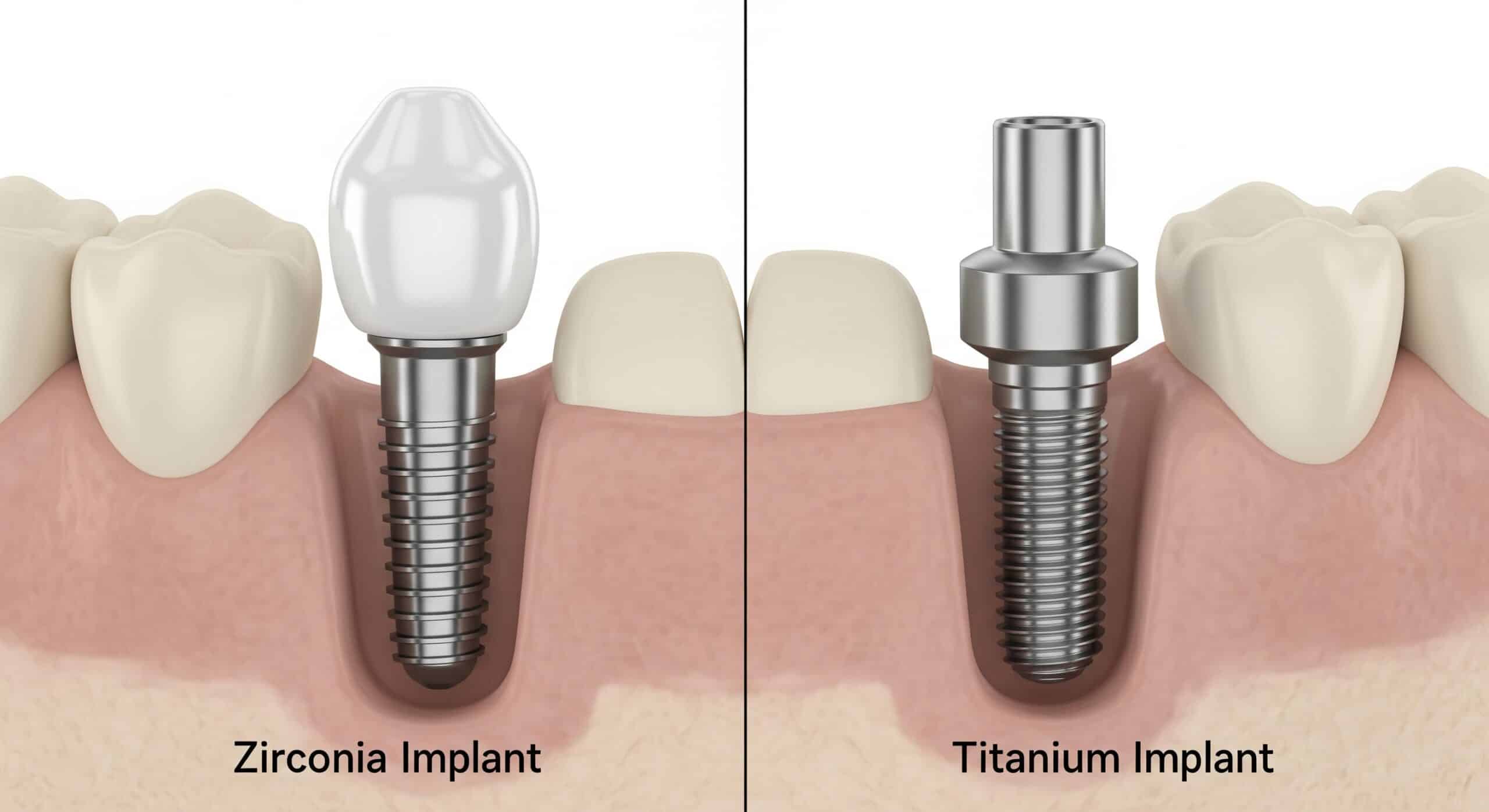
What material is best for implants – zirconia or titanium implants? Zirconia is better for cosmetics (no gray metal) and people who have allergies and biocompatibility issues. Titanium is better for full mouth implant cases and people who clench their teeth a lot. Needless to say there are many advantages of zirconia dental implants. But there are also many advantages to titanium implants even beyond the obvious cost advantages. Strength, durability and titanium bends and does not break usually – just like natural teeth. Zirconia is strong, but does not bend and at a certain point it will break. Clearly ceramic is white like natural teeth and will definitely never corrode.
As you can see, the two materials are just different. It really just depends on the circumstances. Suffice to say, that zirconia is a better cosmetic implant. Titanium implants should not be used for people with nickel and other metal allergies. Titanium is better for people that clench their teeth a lot and replacing molars.
Metal implants made of titanium corrode slowly over time in the mouth in a rusting-like process. After all humans are practically all water and what happens when you mix metal and water? Titanium corrosion can lead to implant inflammation called peri-implantitis. The cause of the inflammation is the titanium corroding and rust-like particles leaking out into jawbone. Corrosion can lead to implant rejection? Practically speaking, titanium corrosion is a very slow process. Implant failure do to corrosion is very rare and may be a minor concern for most people. Exceptions may be people with known metal allergies to nickel and people who have lots of other sensitivities.
Zirconia implants are new and experimental. That is absolutely false. Zirconia implants have been used since the 1980s. That makes ceramic implants as new as Atari and Pacman. Dental schools in the US offer no training for zirconia implants, but rather only titanium. Since most dentists are not trained to do zirconia implants they offer only titanium.
Are you searching for zirconia implants near me or a ceramic implant dentist? We are a holistic dental office that does lots of metal free ceramic implants. But we also place titanium when it is a better option. Isn’t one better than the other? No. Titanium and zirconia implants are two completely different materials and products with different advantages and disadvantages. The real question is what are the different indications for ceramic and titanium implant tooth replacement.
Over the years, not all ceramic implant reviews have been good. Dr. Adams is very excited about some of the new zirconia implant products. He believes some of the new advancements in 2021 have made zirconia and ceramic just as good as their titanium counterparts in certain situations. Dr Adams believes the needs of each case should be evaluated and the best implant material used for tooth replacement. Certain cases will favor one material over the other and the pros and cons of both materials needs to be weighed with each and every case. Are Zirconia Implants are more Biocompatible than Titanium
In cases where there are allergies and sensitivities, zirconia implants are the better choice because they are more biocompatible.
zirconia vs titanium implants cosmetic
In cases where teeth are small and there are a lot of TMJ clenching forces, titanium may be a better choice. Ceramic implant design vs titanium. Considerations other than material differences exist too. Implants come in different shapes and sizes and these differences need to be considered as well as the material itself. Dr Adams is one of the best dentists in determining what type of implant is best in a given situation. All dental implant options are on the table as we have both titanium and ceramic choices.
Metal free cosmetic options is not a new concept in the dental office. Removing amalgam fillings to get rid of old and unsightly metal fillings has been done for years. Non-metal implants have a unique advantage over titanium implants in cases where: 1) showing metal may be a problem 2) patient metal allergies may be an issue 3) the patient has other metals present in there mouth such as silver fillings and metal crowns. Zirconia implants are sometimes called ceramic implants or cosmetic dental implants.
titaniumj implant gum11
There is no difference. They are interchangeable and analogous when it comes to implants. Zirconia is a specific ceramic. All ceramic implants are made of zirconia, so for implants they are synonymous. Ceramic is a more familiar word for most people, so it has been used more in the past. Now that zirconia is developing a more household name, it is becoming more used than ceramic.
Dr Adams sees patients from Maryland, DC, Virginia, across the USA and abroad. Dr. Adams has successfully placed thousands of implants. Zeramex is the leading manufacturer of zirconia implants in the world and is based out of Switzerland. Dr. Adams does cases involving one up to a full mouth of implants. Dr. Adams performs implant surgery and the teeth that go on top.
“enjoy doing my patient’s implant cases from start to finish…it brings me a great sense of accomplishment and satisfaction…”
Dr. Adams preselects materials that are metal free, safe and biocompatible. “Every material placed into the mouth has an impact on our system,” says Dr. Adams…”We should select the one with the smallest and safest impact possible.”
Zirconia implants are tooth colored as opposed to a metal color of all conventional titanium implants. Metal free zirconia implants pose many advantages over titanium. First, since zirconia implants are white you will never see any metal color by the gum-line when you smile. Since zirconia does not conduct electricity or react electronically, it will never react with other metals in your mouth. Metal things in your mouth all have an electronic charge. things such as silver amalgam fillings, metal crowns, braces, titanium implants, partial dentures. The issue with different metals is they react with one another in a reaction called a Galvanic reaction. During these reactions, there is corrosion, flow of electricity and magnetism. All these reactions are not good for the immune system or nervous system.
zirconia ceramic tooth implant
What is the best dental implant? First, Titanium implants cost less than ceramic and are easier for the dentist to use. Titanium are less likely to fracture than zirconia implants. That being said, I have never seen a zirconia implant fracture. in fact, I have been using zirconia on the biting surfaces of teeth as a crown material for over 10 years. I have only seen a couple zirconia crowns break. However that being written, zirconia is more likely to fracture than titanium implants. Titanium implants have much better parts to use to put teeth on top of implants. Titanium is much easier to use when it comes to multi-teeth implant cases such as all on 4 implants and implant dentures.
As stated above, titanium implants are easier to use for the implant dentist. Zirconia implant dentists need additional training and need to be more experienced to place zirconia implants vs titanium implants. Just because something costs less and is easier to do, does not mean it is the best solution.
Ceramic implants are more expensive than titanium when it comes to tooth replacement. To replace a tooth with a zirconia implant vs titanium, the zirconia implant is 30% more expensive.
There are several zirconia implant manufacturers with FDA approval: Ceraroot, Z Systems, Zeramex, Nobel Biocare and Straumann. Nobel Biocare is the most recent newcomer to the market with the Nobel Pearl zirconia implant.
No. A metal is a material that conducts electricity. In fact zirconia, if anything is an insulator or a material that has everything but metallic properties. Think of wires with a plastic coating. The wire is always a metal or a material that conducts electricity well and the plastic coating is an “insulator” that keeps electronic current inside the wire and does not allow the electricity to escape. Zirconia being an excellent insulator, is quite the exact opposite of a metal. The non-conductivity of zirconia is exactly what helps it perform well in biologic systems because it does not corrode or react with a water based biologic system. After all, we are nearly 100% water anyway and we all know metal rusts or corrodes. It also helps that zirconia is white and looks better too. Zirconia dental implants are an invaluable asset to the zirconia implant dentist and natural holistic dentistry in general.
What is all the hype with metal free ceramic implants? The cosmetic advantages of ceramic implants are obvious. It is a lot easier for a ceramic implant dentist to make a case look natural if the material used is the same color as a natural tooth. Nothing causes a dentist more anxiety than trying to hide unsightly metal in the cosmetic teeth zone.
Zirconia is more biocompatible, but why? It comes down to how ones body reacts to different materials. The body always has a reaction to everything be it good or bad. For example, foods. Some people are allergic to peanuts and some are not. Peanuts can be so reactive that eating peanuts can be grave for some people. For other people peanuts pose no problem and in fact have some health benefits. Clearly peanuts have the potential to be more reactive than celery. Likewise with dental materials, some materials are more reactive than others. It just so happens that titanium dental implants are more reactive biologically than zirconia. Naturally, zirconia implants have immunological advantages over titanium.
Ceramic dental implants are hypoallergenic. Some cases of titanium sensitivity show up years after surgery when itchiness and inflammation develop around implant sites. It’s a perfect setup for bone loss and the potential failure of an implant.
Today, there’s a growing number of people with allergies, sensitivities and immune system problems; therefore implantation of tooth root devices should be seriously considered. Especially since long term exposure to sensitive materials can lead to chronic systemic inflammation and autoimmune diseases such as Hashimoto’s, Lupus, Periodontal disease among many others. The removal of implants from jaw bone is not a simple procedure either. No question, the demand for zirconia implant dentists will be on the rise.
People with thin gums and who are susceptible to gum recession may end up with gray metallic-looking gums or titanium showing around the margin of the crown. Since zirconia is non-metallic and white, it is much more natural looking. Zirconia has been referred to as the natural dental implant. It’s a perfect base color that closely mimics what nature created in the first place. Tooth-colored materials makes cosmetic implant dentistry a lot easier.
Ceramic does not corrode and it will not conduct electricity or heat. As a bio inert material, it will never break-down and migrate to other sites in the body or interfere with the maintenance of optimal health.
Zirconia does not conduct electricity – a huge benefit for the non-metal implant dentist. Bacterial growth on the surface of ceramic implants is far less likely than titanium due to it’s non-conductivity. Metal conductivity and corrosion promotes bacterial growth and increases the chances of peri-implantitis around titanium vs zirconia. Research shows healthier gums around zirconia dental implants relative to metal including titanium and other metal restorative materials. Zirconia implants are the perfect choice for tooth replacement for people with cosmetic concerns and material sensitivity issues.
Ceramic does not interfere with the movement of energy though the body’s meridians. Because zirconia is electronically neutral, it has a smaller impact on the meridians than metallic materials. it is an ideal material for tooth replacement for people who want holistic and biological implant treatments.
Issues of ceramic vs titanium implants needs to be further explored as do issues of root canals vs zirconia implants. While the corrosive properties of titanium implants has been established, we will need to see how this impacts long-term titanium implant success and if it is a true cause or risk factor in titanium implant failure.
There has been a big evolution of zirconia implants. We Currently use Zeramex zirconia implants due to their high rate of success, ease of use, biocompatibility and it is white and non-metallic properties.
Zirconia implants can be used in implant bridges, single implant cases and select full mouth implant cases. Ceramic implants are not ideal for all on four dental implants cases.
Zirconia Implants are definitely placed differently than titanium implants. The crowns are also fitted differently than titanium. The bite needs to be adjusted differently than titanium too. It is advisable to seek a dentist who has experience in placing ceramic Implants and not just any implant dentist.
There is definitely a difference between the training for ceramic and titanium implant dentistry. Zirconia implant dentistry is more specialized and most zirconia implant dentists have placed hundreds if not thousands of titanium implants before doing ceramic. In fact, until zirconia protocols become easier, dentists should get acclimated to titanium prior to doing more difficult zirconia implant dentistry cases.