
 (301) 421 1996
 burtonsvillesmiles@gmail.com


Early Pediatric Expansion (Ages 3 to 8) Expander
Building a Proper Skeletal Foundation Early
In young children, the facial bones and palatal sutures are naturally flexible. The SPACE appliance is a custom 3D metal-printed Haas-style expander designed specifically for early childhood orthopedic development.
By starting early, we guide natural jaw growth, create space for developing permanent teeth, and expand the nasal airway foundation before more rigid adult bone development occurs.
Contact Dr. Adams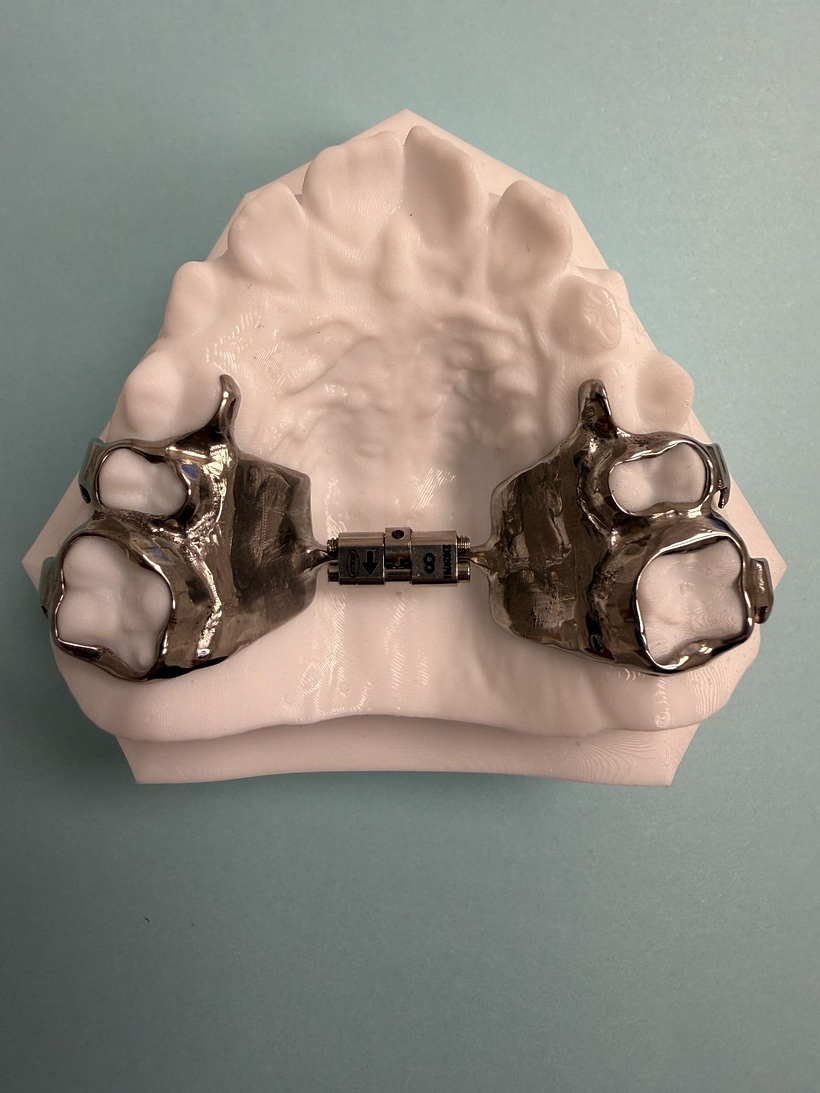
|
|
|
Why Treat So Early?
Transverse maxillary development is directly linked to nasal airway capacity. Treating early addresses crowded dental arches, crossbites, and limited tongue space while the child’s jaw is naturally adaptable.
Controlled, Gentle Expansion
SPACE utilizes an age-appropriate orthopedic expansion protocol designed specifically for flexible pediatric suture lines, eliminating the discomfort of traditional aggressive expanding methods.
SPACE + Rigid Clear Aligners
Two different jobs working together: SPACE develops the skeletal bone structure, while clear aligners guide individual tooth position and harmonize the upper and lower arches simultaneously.
A Modern Version of a Proven Concept
The Haas-style palatal expander has a long history in orthodontics. SPACE takes this fundamental concept and brings it into the digital age.
Each appliance is custom designed and 3D metal printed for the individual child. This allows us to create a precise, low-profile appliance specifically adapted to the child’s developing anatomy.
Made for Young, Growing Children
Slow Expansion. Growing Palate.
SPACE is designed for slow, controlled palatal expansion.
In young children, the palatal sutures are considerably more flexible than they are in adolescents and adults. This provides an opportunity to achieve meaningful skeletal expansion with an age-appropriate orthopedic approach.
Instead of trying to overcome a mature skeletal system later, SPACE takes advantage of a period when the child’s facial structures are naturally growing and adaptable.
Why SPACE?
Traditional orthodontics often begins after many of the permanent teeth have already erupted.
SPACE asks a different question:
Why wait for the consequences of inadequate space if we can identify the developing problem earlier?
For the right young child, early expansion provides an opportunity to guide development while the palate is still flexible and responsive.
The objective is not simply to move teeth outward.
We want to develop the maxilla itself.
Expansion Is Only Part of the Story
Creating a wider upper jaw does not automatically put every tooth in the right position. Some children have teeth that are rotated, tipped, crowded, or positioned incorrectly within an underdeveloped arch.
For appropriate patients, SPACE treatment can therefore be combined with rigid clear aligners.
The expander develops the skeletal foundation.
The aligners help:
- Upright tipped teeth
- Uncrowd and improve tooth position
- Coordinate the teeth with the developing arch
- Guide the shape of the lower dental arch
This allows us to think beyond simply “expanding the upper jaw.”
What About the Lower Jaw?
There is no expansion screw in the lower jaw.
However, the mandibular dental arch may also be narrow, crowded, or poorly shaped as a consequence of the child’s developing bite and tooth positions.
Rigid clear aligners can be used when appropriate to upright and reposition the lower teeth and reshape the developing mandibular dental arch as the upper jaw is expanded.
This helps coordinate the upper and lower arches rather than treating them independently.
Schedule Consultation